
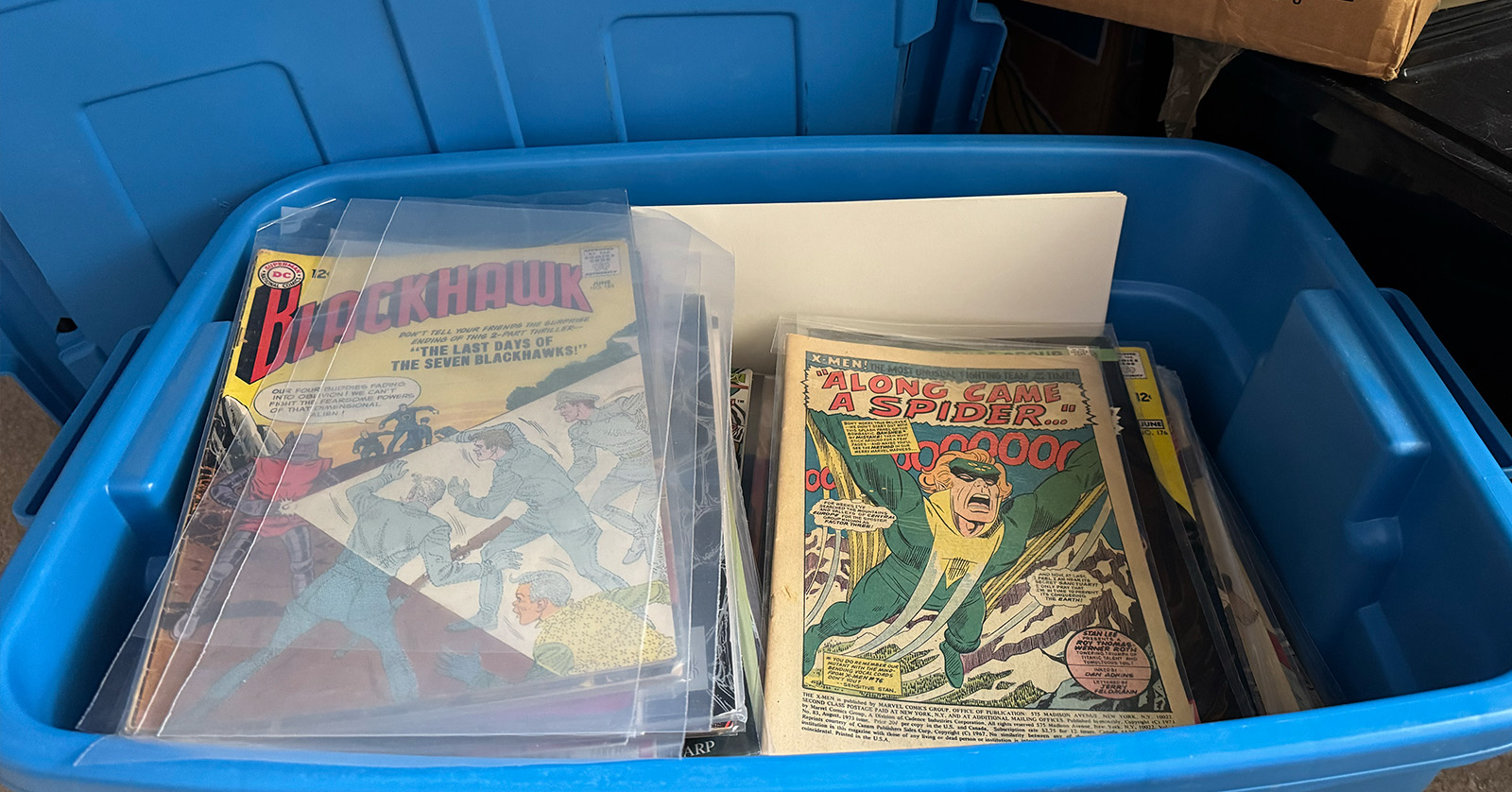
Most of the work on Comic Scry has been technical — teaching a phone to recognize a comic from a photo, then attach a number to it. But the hardest problem was never the tech. It’s that the person holding the box usually doesn’t know anything about comics, didn’t choose this, and just wants to know what to do with it before the weekend’s over.
So I stopped building for a bit and wrote them some guides.
Guides for the box you didn’t ask for
Plain English. No “first appearance vs. key issue” lecture, no hobby gatekeeping — just the one or two things that matter, for someone clearing out a relative’s house on a deadline:
- I inherited a box of comics — what do I do? — the whole plan in one afternoon: three piles, don’t sell the box flat, don’t assume it’s a jackpot.
- Are old comics actually worth anything? — why “old” isn’t the signal people think it is, and what is.
- How to tell a reprint from an original — the most expensive mistake a non-collector can make, and the one-minute check that prevents it.
- Selling an estate comic collection — bulk lot, or pull the valuable issues first? How to get a number you can defend.
- Where to sell comic books — without getting ripped off.
They live at comicscry.com/guides. Same thing the app is, really — a fast read for someone who doesn’t want to become an expert, they just want to make a good call.
Where the prices come from now
In an earlier post I said I’d rebuilt the pricing to use only completed sales. That’s not what’s running now.
Comic Scry’s prices come from current eBay listings — what other collectors are asking for the same book, right now. Asking prices, not sold prices, and the app labels them that way on every result.
Asking prices run higher than what books finally sell for, so the app shows the range as a market signal and treats the top of it as a ceiling, not a number you’ll get. A lot of cheap comic-price tools show the same kind of number and call it “value.” This one calls it an asking price.
Sold-price comps are the next upgrade, once I can source them cleanly. Until then, asks.
Same job, twice
The guides and the prices do the same job: give someone enough to make a good call on a box they didn’t ask for. Most of it is common. A few books aren’t. A phone can tell them apart, and a few plain pages can tell you what to do next.
— Adam