
The one check that stops you mis-pricing a famous cover
How to tell a comic reprint from an original
The same famous cover can be a valuable original or a common reprint — and they look almost identical. Here's the 60-second check to tell which one you're holding before you sell, toss, or celebrate.
Updated June 19, 2026
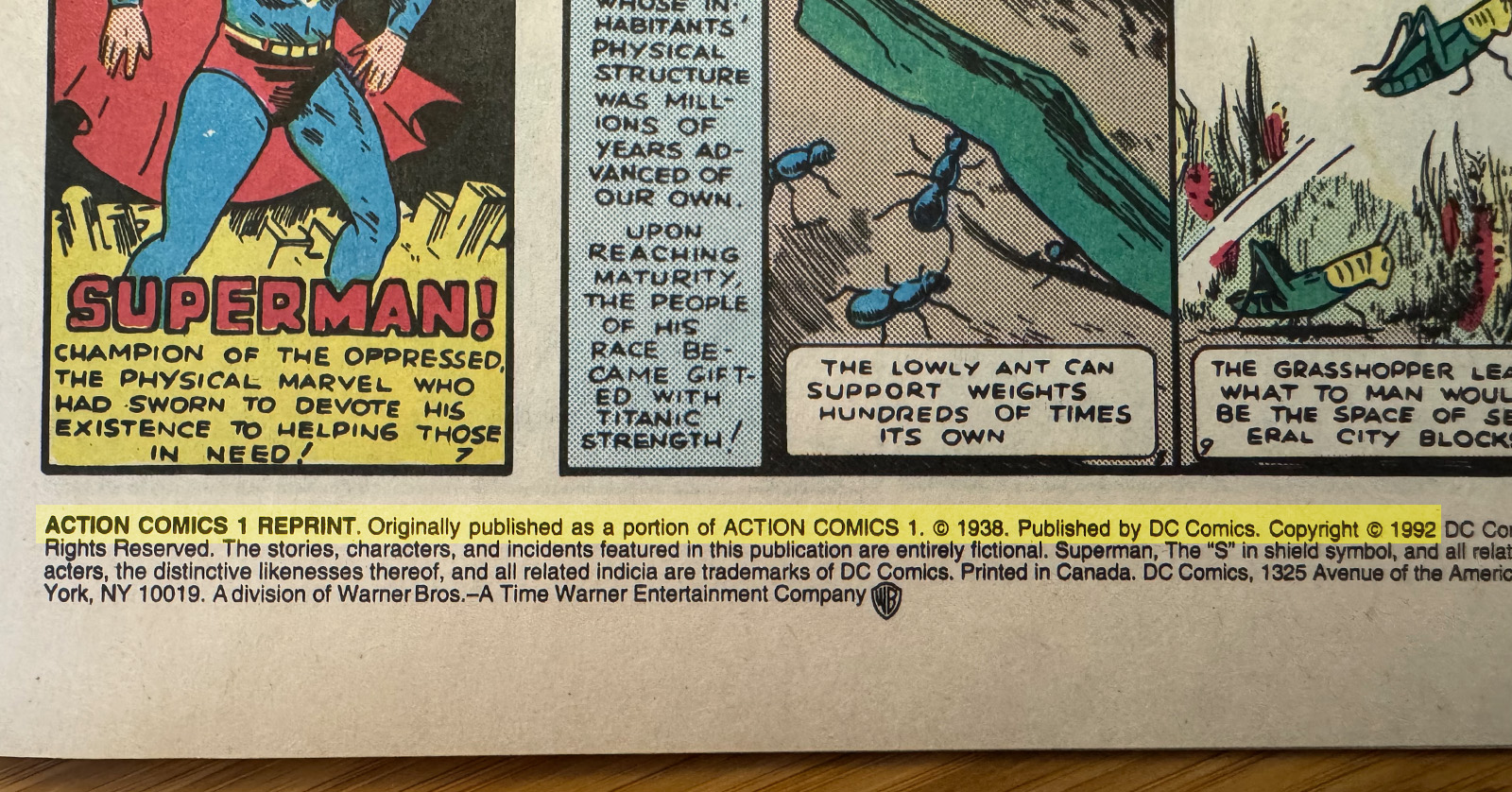
Found a comic with a legendary cover in the box — a famous superhero, an issue you half-recognize from a headline? Don’t celebrate yet, and don’t toss it. The most valuable comics are also the most reprinted, and a reprint can look almost identical to the original. The art is the same; the value usually isn’t.
There’s treasure hiding in that box — but usually in one or two books, while the rest are common. This is the check that tells you which is which, and it takes about a minute.
What to check first
Don’t trust the cover art — reprints copy it exactly to look vintage. Hold the comic and check these details instead:
- A barcode that shouldn’t be there. Very old originals predate cover barcodes. A printed barcode box on a book whose original came out before barcodes existed points to a reprint. (Some originals had them too, so use this with the other checks, not alone.)
- A cover price or date from the wrong era. An original from a given decade has a price and look that fit it. If a book that should be decades old shows a much later price or date, it’s a reprint.
- A reprint label. Many reprints say so — “reprint,” a collection title, an anniversary line, or “facsimile edition” (a modern reproduction that deliberately copies the old cover).
- The small print box inside. On the first inside page, or inside the front cover, there’s a dense block of tiny text — collectors call it the indicia, and it’s the closest thing a comic has to a birth certificate. You don’t need the word. Look for the date and any “second printing” note; a later date settles it.
The faster way — Pick. Snap. Sort.
Reading that small print takes practice, and a good reproduction can fool a careful person. The faster way is to let the app read the tells for you. Three steps — Pick. Snap. Sort.
- Pick — take the famous-looking book.
- Snap — point your phone at the cover. Comic Scry identifies the exact issue and flags reprints and reproduction editions. It’s built on the volunteer-run Grand Comics Database (which we credit and donate to), and it shows the current asking prices for the book — a market signal to help you sort, not an appraisal.
- Sort — drop it into “check closer” or “probably common.”
You can try this on 5 books free, with no account and no payment; after that it’s $19.99 once for 500 scans, never a subscription.
Either way, don’t decide on vibes. Don’t celebrate a famous cover, and don’t toss it, until you’ve confirmed which version it is — that one habit prevents the most expensive mistake a non-collector makes.
Why the same cover can mean very different money
An original of a major issue is scarce — printed decades ago, before anyone treated comics as collectible, mostly read and thrown away, so few clean copies survive. That scarcity is the value.
A reprint is the opposite. It exists because the original got famous — printed in big numbers for collections, anniversaries, and giveaways, long after the fact. Nothing rare about it. Same image. Completely different object.
So flip the default: when a legendary cover turns up, assume reprint until the details prove original. That’s not pessimism — it’s just the odds. The original is the rare case by definition.
Start with one cover
Don’t sort the whole box in your head. Pick the most famous-looking comic, run the checks or snap the cover, and put it in “check closer” or “probably common.” Then move to the next. Five scans are free, no account, and 500 is a one-time $19.99 — no subscription. The art will keep fooling you; the small print and the app won’t.
New to all this? Start with are old comics actually worth anything? — or, if a whole collection just landed on you, I inherited a box of comics — what do I do?
Common questions
- If it's an original, where do I sell it without getting ripped off?
- Take the few confirmed-valuable books to a reputable comic shop, or list them individually on a collector marketplace — not a pawn shop or a buyer offering one flat price for the whole box, who's counting on you not knowing what you have. The estate-selling guide covers where each pile goes.
- Can I trust the value range, or is it a guess?
- It's a range of what people are currently asking for the same book on eBay — meant to show whether a book is a $5 book or a $500 book so you don't give away a good one. It's a market signal, not a sold price or a formal appraisal; asking prices run higher than final sales, and condition and the exact edition move the real number.
- Will it work if the cover is torn, faded, stickered, or bagged?
- Usually — it reads the cover art, and you can scan right through a plastic sleeve. Glare, heavy damage, or a price sticker over the logo can block it; try a straight-on photo in even light, or fall back to the small-print checks.
- Does damage change the value?
- A reprint stays low value regardless. An original can lose most of its value with tears, writing, water damage, or missing pages — so a damaged original may still sit at the low end of its range. Handle the promising ones gently.
- Do I need an account or to pay to try it?
- No account, no payment to start. Your first 5 scans are free; after that it's a one-time $19.99 for 500 scans, never a subscription.
- What if it can't identify the book?
- A no-match usually means glare, a covered logo, or an unusual or foreign edition. Re-shoot in even light; if it still misses, use the small-print checks or set the book aside for a shop. It doesn't mean the book is rare or worthless.
- Are all reprints worthless?
- No — some early or notable reprints carry value. But most are worth far less than the original. Treat a reprint as probably common unless a sold-listing check or a dealer says otherwise.
- What does 'original' even mean — first printing, first issue, or first appearance?
- For value, the one that matters is the first printing of the issue people want — often the issue where a major character first appeared. A later printing of that same issue is the reprint you're checking for.
- I have a whole box, not one famous book — do I check every comic?
- Focus first on the famous-looking covers, old superhero books, and #1 issues — that's where reprints, and value, cluster. To sort a whole box top to bottom, see the inherited-box guide.