
If a box of comics just landed in your lap
I inherited a box of comics — what do I do?
The simple plan for a box of comics you didn't ask for: sort it into three piles in an afternoon, find the few books that actually matter, and sell without getting fooled. No comic knowledge required.
Updated June 18, 2026
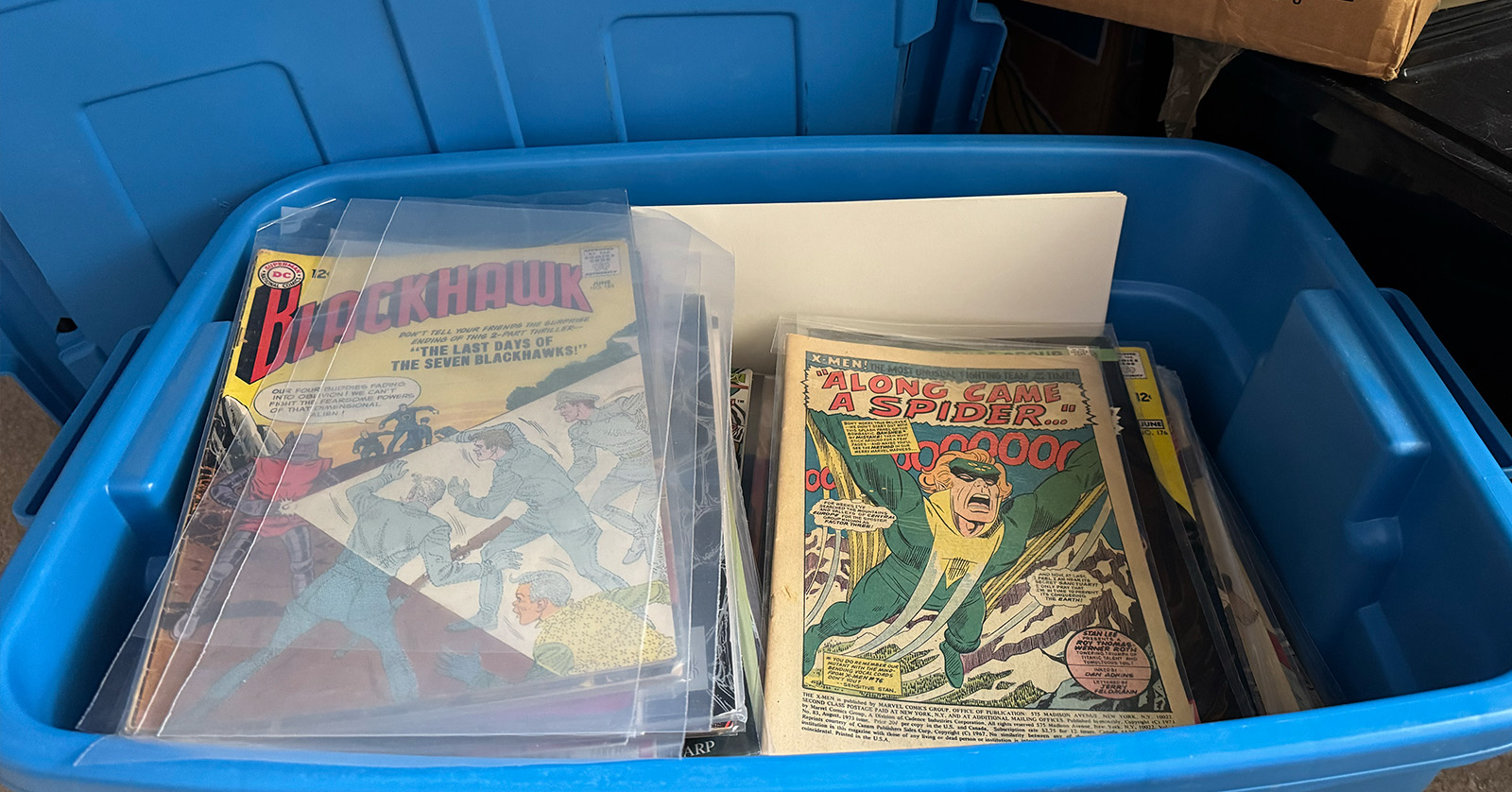
A box of comics just became your problem. Maybe it came from a parent’s closet, an estate cleanout, or a garage sale. You did not ask for this, you do not know comics, and you mostly want to know one thing: is any of this worth anything, and what do I do with it?
You do not need to become a collector. You need to avoid two bad outcomes — then do one simple sort.
Don’t make the two mistakes people regret
Mistake one: selling the whole box for one easy flat price before checking it. That can be fine for common books, but comic value is lopsided — one issue can be worth more than everything else in the box combined. Sell the box flat and you might hand a stranger the only book that mattered.
Mistake two: assuming it’s a jackpot. The opposite trap. You heard a comic once sold for a fortune, so you guard the box like a winning ticket. The honest truth is that most comics from the 1980s and 1990s were printed in huge numbers and are worth a few dollars each.
Both mistakes come from the same place — not knowing which books are which. The fix is to look before you sell. Here’s the fast way.
Sort the box in an afternoon
Work one book at a time. Three steps — Pick. Snap. Sort.
- Pick — take one comic out of the box.
- Snap — point your phone at the cover to identify it and see a price range. (Comic Scry does this. It’s built on the volunteer-run Grand Comics Database, and it shows the current asking prices for the book — a market signal to help you sort, not an appraisal.)
- Sort — drop it into one of three piles:
- Keep — anything the app flags as possibly valuable, or any clean, older book worth a closer look.
- Sell — the solid middle: real value, nothing you need to agonize over.
- Bulk — common, low-value books, worth more sold together than one at a time.
By the end, the box is no longer one mystery. You have a small pile worth a closer look and a larger pile you can treat as bulk.
Have hundreds of comics, not one box? The method is the same — just work in batches and trust the piles. You are not appraising every book; you are separating the few that matter from the many that don’t.
What makes one book worth more than another
You don’t need to learn the hobby. One idea covers most of it: the exact issue matters more than how old the comic is. A 1992 book can be worth a couple of dollars, while a scarcer older issue where a popular character first appeared can be worth thousands. Age by itself is a weak hint. The books worth slowing down for are specific issues collectors actively look for — and most boxes have none, which is exactly why letting the app flag them beats guessing.
After that, two things can change the answer:
- Condition. A clean, flat copy can be worth many times the same book with creases, tape, or stains. Handle the nice ones gently.
- Original vs. reprint. Some famous covers were printed more than once. An original can matter a lot; a later reprint of the same cover may be an ordinary book — and to a non-collector they can look almost identical. Slow down before celebrating or tossing a famous-looking book until you’ve confirmed which version it is. (There’s a whole guide on this: how to tell a reprint from an original.)
When to bring in a person
Sort first, then escalate only what earns it:
- A book comes back as genuinely valuable and you want to sell it for what it’s worth.
- You’re settling an estate and need a number you can explain to family, a buyer, or an estate professional. (That’s its own job — see selling an estate comic collection, including where to actually sell each pile.)
- You have a clean, valuable-looking book and want to know whether it’s worth paying to have it professionally graded before selling.
For everything else, an afternoon and a phone is enough.
Start with five books
You don’t have to commit to anything to find out what’s in the box. Pick five comics from different parts of it — one that looks old, one that looks famous, one that looks clean, one random middle book, and one you almost ignored. Scan them free. You’ll get an identification and a value range for each, then sort them: keep, sell, or bulk.
If the first five help, keep going. There’s treasure hiding in that box — and there’s probably a lot of ordinary paper too. The only way to tell them apart is one book at a time, and now you know how.
Common questions
- How many comics can I scan for free?
- Your first 5 scans are free, with no account and no payment. After that it's a one-time $19.99 for 500 scans — never a subscription. For a single box, the 5 free scans are enough to see how the sort works before you decide anything.
- Is the value range an appraisal I can use for an estate, taxes, or insurance?
- No. Comic Scry shows the current asking prices for a book — what sellers are listing it for, a market signal, not a sold price or a formal appraisal. (Asking prices usually run higher than what books finally sell for.) For probate, taxes, or insurance on high-value books, use it to find which ones are worth a professional appraisal, then get one for those.
- Where does the value come from, and can I trust it?
- It's a range of what people are currently asking for the same book — a market signal, not a sold price. Asking prices usually run higher than what books finally sell for, so treat it as a starting point and a ceiling, not a guaranteed offer — condition and the exact edition move the real number.
- Will it still work on dusty, torn, or faded covers, or old comics with no barcode?
- Usually yes. It reads the cover art, not a barcode, so books from before barcodes existed still work. Very damaged or obscured covers are harder — you can wipe off dust and try again, or confirm a tricky one with a comic shop.
- Do I need an account or to hand over personal information?
- No account is required. You can scan and sort without signing up or giving personal details.
- What if the app can't identify a book, or shows more than one match?
- Some books come back as no match, or with a couple of possible editions — that's normal for obscure or heavily reprinted issues. Pick the closest match, or set the book aside for a comic shop. It does not mean the book is worthless.
- Should I take valuable-looking books out of their bags, or handle fragile ones differently?
- Leave bagged books bagged — you can usually scan right through the bag, and extra handling only adds wear. For loose, fragile, or older books, hold them flat by the edges and avoid opening them more than you need to.
- Does it work on Archie, Disney, manga, and other non-superhero comics?
- Yes — it isn't limited to superheroes and identifies a wide range of comics. A few very niche or non-US books may come back without a match, but most mainstream titles are covered.