
Settle it fairly, without becoming the family comic expert
Selling an estate comic collection: bulk lots vs. pulling the keys
Settling an estate with a comic collection in it? How to decide between selling the whole thing as one lot and pulling the valuable issues first — and how to get a number you can defend, without becoming a comics expert.
Updated June 19, 2026
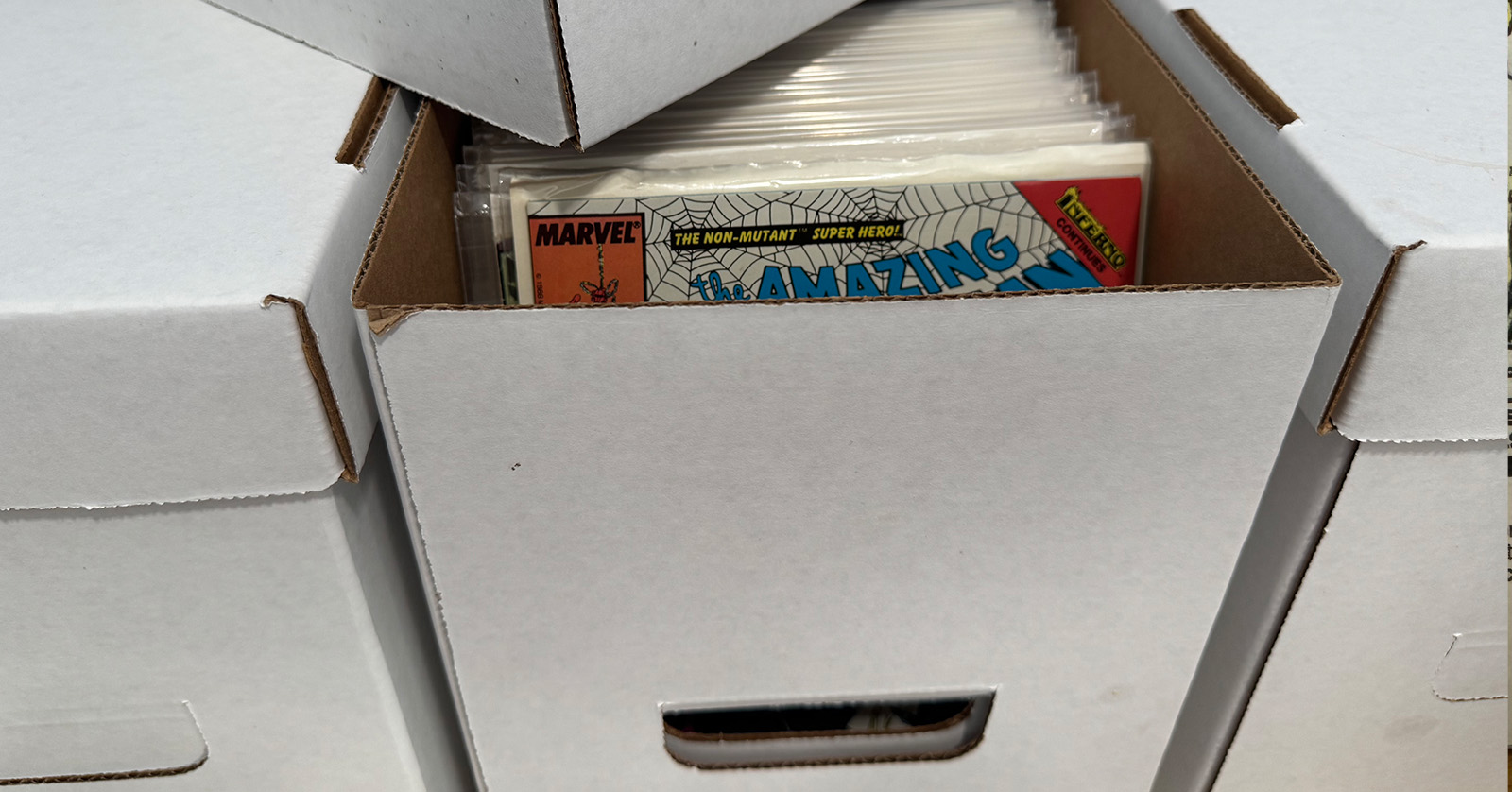
An estate collection is a different problem from a single box in a closet. There’s volume — sometimes thousands of books. There’s time pressure. There’s often more than one person with a stake in the outcome, and a need for a number you can defend, whether that’s for probate, dividing assets, or just being able to tell the family you didn’t give it away.
You don’t need to become the family comic expert. There’s treasure hiding in that box — though usually not the way the movies suggest. Most estate collections are mostly common books; the value, if it’s there, sits in a few standout issues. The whole job is to find those before you sell the rest.
The one decision: sell the lot, or pull the valuable issues first?
Every estate collection comes down to one fork:
Sell it all as one bulk lot. Fast and simple — a dealer or buyer takes the whole thing for a flat price and you’re done in an afternoon.
Pull the valuable issues first, then sell the rest. More work, often a better outcome. You identify the collection, pull the standout books — the valuable single issues (collectors call them “keys”) — sell those individually for what they’re worth, and move the common rest as lots.
Here’s the thing people miss: when a dealer offers one flat price for everything, they’re pricing in the valuable books they expect to find. That number is convenient precisely because it lets the buyer keep the upside. Selling the lot whole isn’t wrong — sometimes the time saved is worth it — but make that trade knowing what you’re trading away, not because you never looked.
And the math is lopsided in a way that’s hard to believe until you see it: in a big collection, the value doesn’t spread evenly. A few standout issues can be worth more than thousands of common books stacked around them. If even one is sitting in the collection, pulling it out and selling it properly can beat the entire flat-lot offer by itself. You don’t have to find them all — you have to not give them away.
Sort the collection without becoming an expert
You can’t carefully appraise every book in a big collection, and you don’t need to. You need a fast pass, then channel decisions per pile. It’s the same three steps that work on any box — Pick. Snap. Sort. — run at volume:
- Pick — take the next book.
- Snap — point your phone at the cover to identify it and see a price range. Comic Scry is built on the volunteer-run Grand Comics Database (which we credit and donate to), and it shows the current asking prices for the book — a market signal to help you sort, not an appraisal.
- Sort — drop it into one of three piles: check closer (the standouts worth selling individually and maybe appraising), sell individually (solid middle value), or bulk lot (common books, sold together).
You don’t scan every book — you scan the candidates (famous covers, #1 issues, old superhero books, anything bagged-and-boarded or set apart by the original owner) and bulk-sort the common rest by eye. That’s why 500 scans covers a large collection. Your first 5 scans are free, with no account and no payment; after that it’s $19.99 once for 500, never a subscription.
Run the whole collection through that pass first. Then decide how to sell each pile — don’t make a final sales call book-by-book as you go.
Getting a number you can defend
If the collection is part of an estate, you likely need a documented value, not a gut feel. You can build a credible baseline yourself: identify each standout book, record its current asking-price range and the date you checked, and total the piles. That’s a documented, evidence-based starting point for probate or splitting assets — and it holds up better than “a dealer said it was worth about this much.”
An asking-price range is not a formal appraisal — and asks run higher than final sales. It’s a documented sorting baseline, so you know what probably belongs in bulk and what deserves a dealer, appraiser, or auction conversation. For genuinely high-value books, layer a professional appraisal on top — but establish the baseline first, so you know which books warrant paying an appraiser, and so the one issue that matters doesn’t disappear into the wrong pile.
Where each pile goes
- Check closer (the standouts) — sold individually: a reputable comic shop, a collector marketplace, or an auction for the highest-value books. These deserve their own listings and good photos. A dealer paying below your range isn’t automatically lowballing — they resell at a profit — but for anything high-value, get a second opinion before you accept.
- Sell individually (the middle) — standard marketplaces, priced against what comparable copies actually sell for.
- Bulk lot — group the common books by run, era, or publisher and sell as bulk “reader” lots, locally or by the box to a liquidator. The goal here is clearance, not squeezing each book.
For more on choosing a buyer and spotting a fair offer, see where to sell comic books.
Do the first five before the big decision
Don’t sort the whole estate in your head. Pick five comics that look old, famous, bagged, or set apart from the rest. Snap each cover. Sort them into check closer, sell individually, or bulk. Then you’ll know whether this is a simple bulk sale or a collection that deserves a slower pass — before you say yes to anyone’s flat offer.
Newer to this? Start with are old comics actually worth anything? — and before you trust a famous-looking standout, check how to tell a reprint from an original.
Common questions
- Do I have to scan every book? I have thousands.
- No. You scan the candidates — famous covers, #1 issues, old superhero books, and anything bagged-and-boarded or set apart by the original owner — and bulk-sort the common rest by eye. That's why 500 scans covers a large collection: you're not scanning every book, just the ones that might matter.
- Is the app's value range solid enough for probate, taxes, or dividing assets?
- It gives you a documented baseline — the current asking prices for each book, with the date you checked — which beats a guess or a single dealer's say-so. Asking prices run higher than final sales, so it's a starting point, not a certified appraisal; for legal, tax, or insurance purposes on high-value books a formal appraisal may still be required. Use the range to find which books warrant one.
- How do I know if a dealer's offer is fair?
- A dealer paying below your range isn't automatically a ripoff — they resell at a profit and carry the labor, risk, and storage, so a fair bulk offer sits below retail. What you're guarding against is an offer far below the range on your standout books. For anything that looks high-value, get a second opinion before accepting.
- Where do I actually sell each pile?
- Standout single books do best individually — a reputable comic shop, a collector marketplace, or an auction for the highest-value ones. The common rest moves as a bulk 'reader' lot, sold locally or to a liquidator by the box. Don't list common books one at a time; the fees and effort aren't worth it.
- Will it work on damaged, musty, faded, or bagged covers?
- Usually — it reads the cover art and you can scan through a sleeve. Glare or heavy damage can block it; try a straight-on photo in even light. Note that heavy damage — water, mold, tears, missing pages — drops even a valuable original to the low end of its range.
- What if it can't identify a book?
- A no-match usually means glare, a covered logo, or an unusual edition. Re-shoot in even light; if it still misses, set the book aside for a dealer. It doesn't mean the book is rare or worthless.
- Should I get books graded or cleaned before selling?
- Not up front. Professional grading — a third-party service that certifies a book's condition — costs real money and weeks of time, and only pays off on genuinely high-value books. Decide after you've identified those, and ask a dealer first. Never clean, press, or repair old comics casually; it can lower value, not raise it.
- What if I pull a book I think is valuable but it turns out to be a reprint?
- Common — the most famous covers are the most reprinted. Check before you celebrate; the reprint-vs-original guide covers the tells, and the app flags reprints and reproduction editions too.
- How do I keep the family from arguing about what it's worth?
- Share the evidence. Keep a simple list of the standout books with their value ranges and the date you checked, plus photos. A documented baseline everyone can see turns 'I think it's worth a lot' into a number with a source behind it — which is exactly what defuses estate disagreements.
- Do I need an account or to pay to start?
- No account, no payment to start. Your first 5 scans are free; after that it's a one-time $19.99 for 500 scans, never a subscription.